
 Most healthcare organizations understand that regulated medical waste must be handled safely and in compliance with the law. What many don't realize is that improper medical waste disposal can quietly become one of the most significant financial risks facing their organization.
When Regulated Medical Waste Disposal Becomes a Multi-Million Dollar Problem
In 2023, one of the nation's largest healthcare organizations made headlines for all the wrong reasons. Kaiser Permanente agreed to pay $49 million to settle allegations that it improperly disposed of hazardous waste, regulated medical waste, and thousands of records containing protected patient information at multiple facilities across California. The investigation, which began after undercover inspectors examined waste dumpsters, revealed improperly discarded pharmaceuticals, blood-contaminated medical devices, sharps, and confidential patient records. Beyond the financial settlement, Kaiser was required to implement enhanced compliance measures and undergo years of independent auditing.
Most healthcare organizations assume that regulated medical waste disposal is simply another operational expense, nothing more than a necessary part of running a medical practice, surgery center, or healthcare facility. The reality is far different. Improper medical waste disposal can expose organizations to substantial regulatory fines, legal liability, increased disposal costs, workplace injuries, and long-term reputational damage. As the generator of regulated medical waste, your organization also has a continuing responsibility to ensure that waste is managed properly from "cradle to grave." That responsibility doesn't end when a licensed waste hauler picks it up.
Understanding these risks is the first step toward protecting your organization, your employees, and your bottom line.
Regulated Medical Waste Is More Than a Compliance Requirement
At its core, regulated medical waste disposal exists to protect people and the environment from exposure to infectious materials and other potentially hazardous waste generated during patient care. Federal, state, and local regulations establish strict requirements for how this waste must be identified, segregated, stored, transported, treated, and ultimately disposed of. These regulations are designed to reduce the risk of injury, disease transmission, and environmental contamination.
However, proper medical waste disposal is about far more than simply meeting regulatory requirements. It is a critical business function that helps protect every aspect of a healthcare organization. Effective waste management safeguards an organization's financial health by reducing unnecessary disposal costs, avoiding costly fines, and minimizing legal liability. It protects an organization's reputation by demonstrating a commitment to safety, compliance, and responsible environmental stewardship. It protects employees by reducing the risk of needlestick injuries and exposure to infectious materials. Most importantly, it protects patients by helping maintain a safe healthcare environment and reinforcing the trust they place in their providers.
The organizations that view regulated medical waste management as a strategic investment rather than just another compliance obligation are often the ones that experience fewer incidents, lower operating costs, and stronger long-term performance.
When done correctly, proper waste management doesn't just keep an organization compliant. It helps protect its people, its reputation, and its bottom line.
The Hidden Financial Risks of Improper Medical Waste Disposal
The cost of improper regulated medical waste disposal extends far beyond your monthly waste management invoice. A single mistake can create a ripple effect of financial consequences that impact nearly every aspect of a healthcare organization.
Regulatory Fines
Federal and state agencies take medical waste compliance seriously, and violations can result in substantial financial penalties, corrective action plans, and increased regulatory oversight. In 2023, Kaiser Permanente agreed to pay $49 million to settle allegations involving the improper disposal of medical waste, hazardous waste, and protected patient information across multiple California facilities.
Employee Injuries
Improperly managed sharps and infectious waste increase the risk of needlestick injuries and exposure incidents, often leading to medical treatment, testing, workers' compensation claims, and lost work time. According to the CDC, hundreds of thousands of sharps-related injuries occur among healthcare workers each year, many of which are preventable through proper waste handling and disposal practices.
Legal Liability
Compliance failures can quickly become legal issues. Improper waste disposal may expose organizations to employee lawsuits, environmental claims, or HIPAA-related actions if confidential patient information is discarded improperly. In 2022, Quest Diagnostics agreed to pay approximately $5 million to resolve allegations involving the improper disposal of hazardous waste, medical waste, and protected patient information at facilities throughout California.
Increased Disposal Costs
Every pound of regular trash that is mistakenly placed into a regulated medical waste container costs significantly more to dispose of than municipal solid waste. Poor waste segregation practices can quietly increase disposal expenses by thousands of dollars each year without organizations realizing where the added costs originate.
Lost Productivity
When employees spend time correcting waste segregation errors, completing incident reports, searching for containers, or responding to inspections, they are spending less time caring for patients and performing other essential responsibilities. Small daily inefficiencies quickly compound into hundreds or even thousands of lost labor hours each year.
Reputation Damage
Trust is one of the most valuable assets in healthcare. Publicized compliance failures can generate negative media coverage, reduce patient confidence, and damage relationships with partners and the community. The highly publicized enforcement actions involving Kaiser Permanente and Quest Diagnostics demonstrate how medical waste management failures can become lasting reputational events that extend well beyond the original compliance issue.
The good news is that these risks are largely preventable. With proper training, effective waste segregation, compliant disposal practices, and the right waste management partner, healthcare organizations can reduce costs, improve safety, and strengthen compliance while protecting their long-term financial health.
Your Responsibility Doesn't End When the Waste Leaves Your Facility
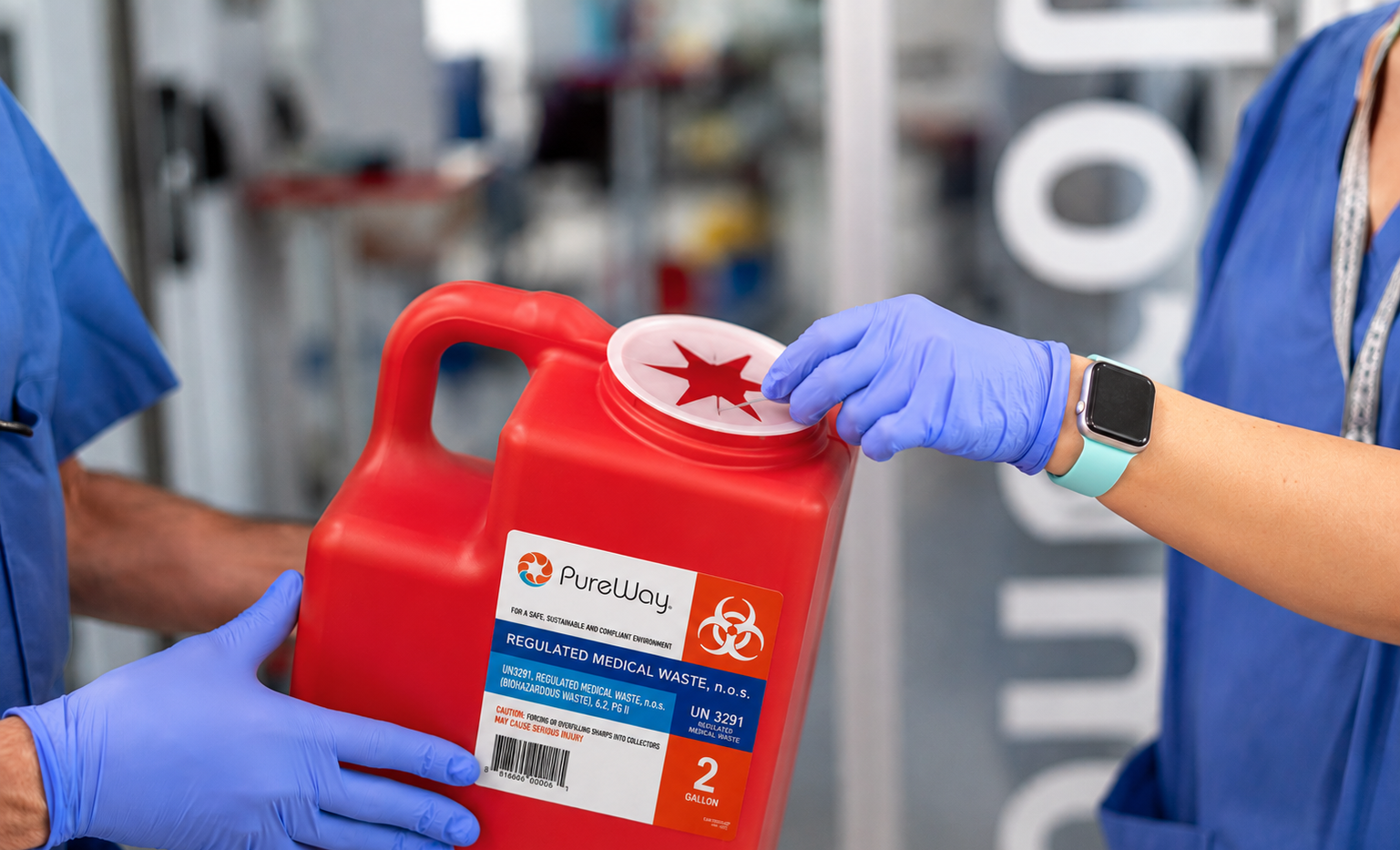
One of the most common misconceptions in healthcare is that responsibility for regulated medical waste ends the moment a licensed waste hauler removes it from the facility. In reality, healthcare organizations remain responsible for ensuring their waste is managed properly throughout the entire disposal process, from the moment it is generated until its final treatment and disposal. This "cradle-to-grave" approach is a fundamental principle of effective risk management.
That responsibility begins with selecting a reputable, properly licensed waste management provider, but it doesn't end there. Healthcare organizations should also maintain accurate documentation, ensure employees are properly trained on waste segregation and handling procedures, verify that waste is packaged and labeled correctly, and periodically evaluate vendor performance to confirm that waste is being managed in accordance with applicable state and federal regulations. These steps not only support compliance but also demonstrate due diligence should questions ever arise.
From a business perspective, this is about far more than regulatory compliance; it's about protecting your organization from unnecessary risk. A strong waste management program helps reduce the likelihood of costly fines, legal liability, operational disruptions, and reputational damage. By treating medical waste management as an ongoing risk management strategy rather than a one-time transaction, healthcare organizations are better positioned to protect their employees, their patients, and their financial future.
Why Proper Regulated Medical Waste Disposal Saves Money
Many healthcare organizations view regulated medical waste disposal as a necessary expense, but the reality is that an effective waste management program is an investment that can generate measurable cost savings. The goal isn't simply to dispose of waste correctly. It's to prevent the unnecessary expenses that result from doing it incorrectly.
Proper waste segregation helps eliminate waste overclassification, ensuring that ordinary trash isn't unnecessarily treated as regulated medical waste, which can significantly reduce disposal costs. A well-managed program also lowers the risk of OSHA and DOT violations, helping organizations avoid costly fines, repeat inspections, corrective action plans, and the administrative burden that accompanies regulatory enforcement. At the same time, safer waste handling practices reduce the likelihood of employee injuries, minimizing workers' compensation claims, medical expenses, overtime costs, and lost productivity.
Perhaps most importantly, a proactive waste management strategy helps reduce an organization's overall financial risk. By maintaining accurate documentation, following established procedures, and partnering with a reputable waste management provider, healthcare organizations are less likely to face expensive legal disputes, regulatory investigations, or reputational damage. Simply put, investing in proper medical waste disposal costs far less than paying for the consequences of getting it wrong. The organizations that recognize this don't view waste management as an unavoidable expense; they see it as a smart business decision that protects both their operations and their bottom line.
Small Mistakes Can Become Expensive Problems
Major compliance failures rarely begin with a single catastrophic event. More often, they start with small, seemingly harmless mistakes that occur during everyday operations. Improper waste segregation, sharps discarded in regular trash, overfilled sharps containers, missing or incorrect labels, incomplete documentation, and waste stored beyond allowable time limits may not seem significant on their own. However, each of these errors increases the likelihood of regulatory violations, employee injuries, higher disposal costs, and legal liability.
The real financial impact occurs when these small mistakes compound over time. A mislabeled container can trigger additional inspections. Improper segregation can increase disposal costs month after month. Missing documentation can create compliance issues during an audit. An overfilled sharps container can lead to a preventable needlestick injury. Individually, these issues may seem minor, but together they create unnecessary expenses that quietly erode an organization's bottom line. The most successful healthcare organizations recognize that preventing small mistakes today is one of the most effective ways to avoid costly problems tomorrow.
The Most Successful Healthcare Organizations Think Beyond Compliance
The most successful healthcare organizations understand that compliance is the starting point, not the finish line.
Rather than asking, "Are we compliant?" they ask a more strategic question: "Are we operating efficiently?"
They recognize that effective medical waste management is about more than avoiding citations; it's about creating safer, smarter, and more cost-effective operations.
By focusing on proper waste segregation, standardized workflows, employee education, and responsible disposal practices, these organizations reduce unnecessary disposal costs, improve operational efficiency, enhance employee safety, and support sustainability initiatives. At the same time, they lower their exposure to regulatory penalties, legal liability, and other hidden financial risks. This is where organizations gain a true competitive advantage, not by doing the minimum required, but by using effective medical waste management as a tool to improve performance, strengthen compliance, and protect their bottom line.
Regulated Medical Waste Is More Than a Compliance Issue
One thing should be clear: regulated medical waste management isn't simply a regulatory obligation; it's a financial strategy. Every decision your organization makes regarding waste segregation, handling, documentation, and disposal has the potential to impact operating costs, employee safety, compliance, and long-term business performance.
If you're only measuring your monthly disposal invoices, you're missing the real cost. The most significant expenses associated with medical waste are often the ones you don't see, like regulatory fines, employee injuries, legal liability, lost productivity, unnecessary disposal costs, and reputational damage.
What Is Improper Medical Waste Management Really Costing Your Organization?
The visible disposal invoice is only one piece of the puzzle. The hidden costs, from compliance failures and legal exposure to wasted labor, workplace injuries, and inefficient disposal practices, can quietly cost healthcare organizations thousands of dollars every year.
If you're ready to identify opportunities to reduce costs, strengthen compliance, and improve operational efficiency, contact the PureWay Compliance team. Our experts can evaluate your current waste management program, identify hidden cost-saving opportunities, and help you build a safer, more efficient, and more compliant medical waste management strategy.
Frequently Asked Questions
What are the best options for a nationwide medical waste disposal service that ensures regulatory compliance?
The best nationwide medical waste disposal services provide more than just waste pickup. Look for a provider that offers comprehensive compliance support, including proper waste segregation guidance, employee training, compliant transportation, documentation, and ongoing regulatory assistance. A provider with nationwide coverage should also understand both federal regulations and the specific medical waste requirements of each state where your organization operates. PureWay Compliance offers nationwide medical waste management solutions designed to help healthcare organizations reduce risk, maintain compliance, and improve operational efficiency.
What should I look for in a medical waste disposal service for my pharmacy?
When selecting a medical waste disposal service for a pharmacy, consider more than pricing alone. The provider should offer compliant disposal of pharmaceutical and regulated medical waste, provide the appropriate containers and labeling, maintain accurate documentation, and understand applicable OSHA, DOT, EPA, DEA, and state regulations. Reliable customer support, flexible pickup schedules, and compliance expertise are also important. A knowledgeable partner such as PureWay Compliance can help pharmacies safely manage waste while reducing compliance risks and unnecessary disposal costs.
Who are the top providers of hazardous waste management services for pharmacies that prioritize compliance with legal regulations?
Several national companies provide hazardous waste management services for pharmacies, including PureWay Compliance. When evaluating providers, healthcare organizations should compare their regulatory expertise, nationwide coverage, customer support, documentation processes, sustainability initiatives, and ability to help maintain compliance with federal and state requirements. The best provider is one that not only removes waste safely but also helps reduce your organization's compliance and financial risk.
What are the most cost-effective solutions for managing medical waste disposal in a small healthcare practice?
The most cost-effective medical waste disposal programs focus on prevention rather than simply reducing pickup costs. Proper waste segregation, staff education, right-sized service schedules, appropriate container placement, and regular waste audits can significantly reduce regulated medical waste volumes and disposal expenses. Partnering with an experienced provider like PureWay Compliance can also help identify inefficiencies that lower overall waste management costs while maintaining full regulatory compliance.
How can pharmacies manage their regulated medical waste effectively?
Pharmacies can effectively manage regulated medical waste by properly segregating waste streams, using approved sharps and pharmaceutical waste containers, training employees on disposal procedures, maintaining accurate documentation, and working with a licensed medical waste disposal provider. Regular compliance reviews and waste assessments can also help identify opportunities to improve safety, reduce disposal costs, and minimize regulatory risk.
Which waste disposal services offer nationwide coverage?
Several medical waste disposal companies provide nationwide service, including PureWay Compliance. When comparing providers, organizations should consider more than geographic coverage. Look for comprehensive compliance support, responsive customer service, transparent pricing, sustainability initiatives, and expertise in managing regulated medical waste across multiple states.
How do I ensure compliance with medical waste regulations in my healthcare facility?
To ensure compliance with medical waste regulations, healthcare facilities should implement clear waste segregation procedures, provide ongoing employee training, use properly labeled and approved containers, maintain required documentation, partner with a licensed medical waste disposal company, and conduct regular internal compliance reviews. Organizations should also stay current with federal, state, and local regulations, as requirements can vary by jurisdiction. Working with an experienced compliance-focused provider like PureWay Compliance can help reduce regulatory risk while supporting safe, efficient medical waste management.