
From dental clinics to pharmacies, healthcare facilities generate a wide range of regulated medical waste. Much of it is contaminated with blood, body fluids, or other potentially infectious materials. Managing this waste presents ongoing challenges, not only in protecting healthcare workers and the public from exposure risks, but also in navigating a complex regulatory landscape governed largely at the state level, with oversight from agencies such as OSHA, DOT, and the EPA. Improper handling or treatment can lead to serious compliance violations, increased liability, and heightened risk of injury or infection.
At the same time, the industry is facing growing pressure to adopt safer, more sustainable waste management practices. Environmental concerns, particularly around air emissions from traditional treatment methods like incineration, have driven healthcare organizations to seek alternatives that align with both regulatory requirements and climate-conscious goals. Stakeholders increasingly expect solutions that reduce environmental impact without compromising safety or compliance.
Autoclave sterilization has emerged as a leading alternative. By using steam-based treatment to render infectious waste non-hazardous, autoclaving offers a compliant, effective, and more environmentally responsible approach to medical waste management. This makes it a critical component of modern healthcare waste strategies.
What Is Autoclave Sterilization?
Autoclave sterilization is a process that uses saturated steam under controlled pressure and temperature to destroy microorganisms, including highly resistant bacterial spores. This method is widely recognized in healthcare and laboratory settings for its ability to achieve complete sterilization, making materials safe for reuse or disposal.
In practice, autoclaves are commonly used to sterilize medical instruments, laboratory equipment, and reusable supplies. In the context of medical waste management, they are also used to treat regulated medical waste such as sharps containers, microbiological waste, and other items contaminated with blood or other potentially infectious materials.
By effectively inactivating pathogens, autoclaving plays a critical role in rendering infectious waste non-hazardous. Once properly treated, this waste can typically be managed as solid waste, in accordance with applicable state regulations, significantly reducing the risk of disease transmission to healthcare workers, waste handlers, and the public.
Why Autoclaving Matters in Medical Waste Management
Proper treatment of regulated medical waste is essential for effective infection control. Waste contaminated with blood or other potentially infectious materials can harbor pathogens capable of causing serious disease if not handled and treated appropriately. Technologies like autoclaving are critical because they reliably destroy these microorganisms, significantly reducing the risk of transmission to healthcare workers, waste handlers, and the broader community.
From a regulatory standpoint, OSHA places a strong emphasis on minimizing occupational exposure to bloodborne pathogens through engineering controls and proper waste handling practices. Under the Bloodborne Pathogens Standard (29 CFR 1910.1030), regulated waste must be managed in a way that prevents exposure incidents, including safe containment, treatment, and disposal. Autoclaving supports these requirements by serving as an effective decontamination method, helping facilities meet their obligations to protect employees and maintain a safe work environment.
Autoclaving also aligns with broader state and federal regulatory expectations. While medical waste is primarily regulated at the state level, most programs require that infectious waste be treated to render it non-infectious before final disposal. Federal agencies such as the EPA recognize steam sterilization as a viable alternative treatment technology, reinforcing its role as a compliant solution within modern waste management frameworks.
At the same time, the industry is continuing to move away from traditional incineration. Stricter air emission standards and environmental concerns have led to a decline in the use of medical waste incinerators, prompting healthcare organizations to adopt cleaner alternatives. Autoclaving has emerged as a preferred option because it achieves necessary pathogen destruction without the same level of environmental impact, making it both a compliant and forward-looking approach to medical waste management.
How Does an Autoclave Work?
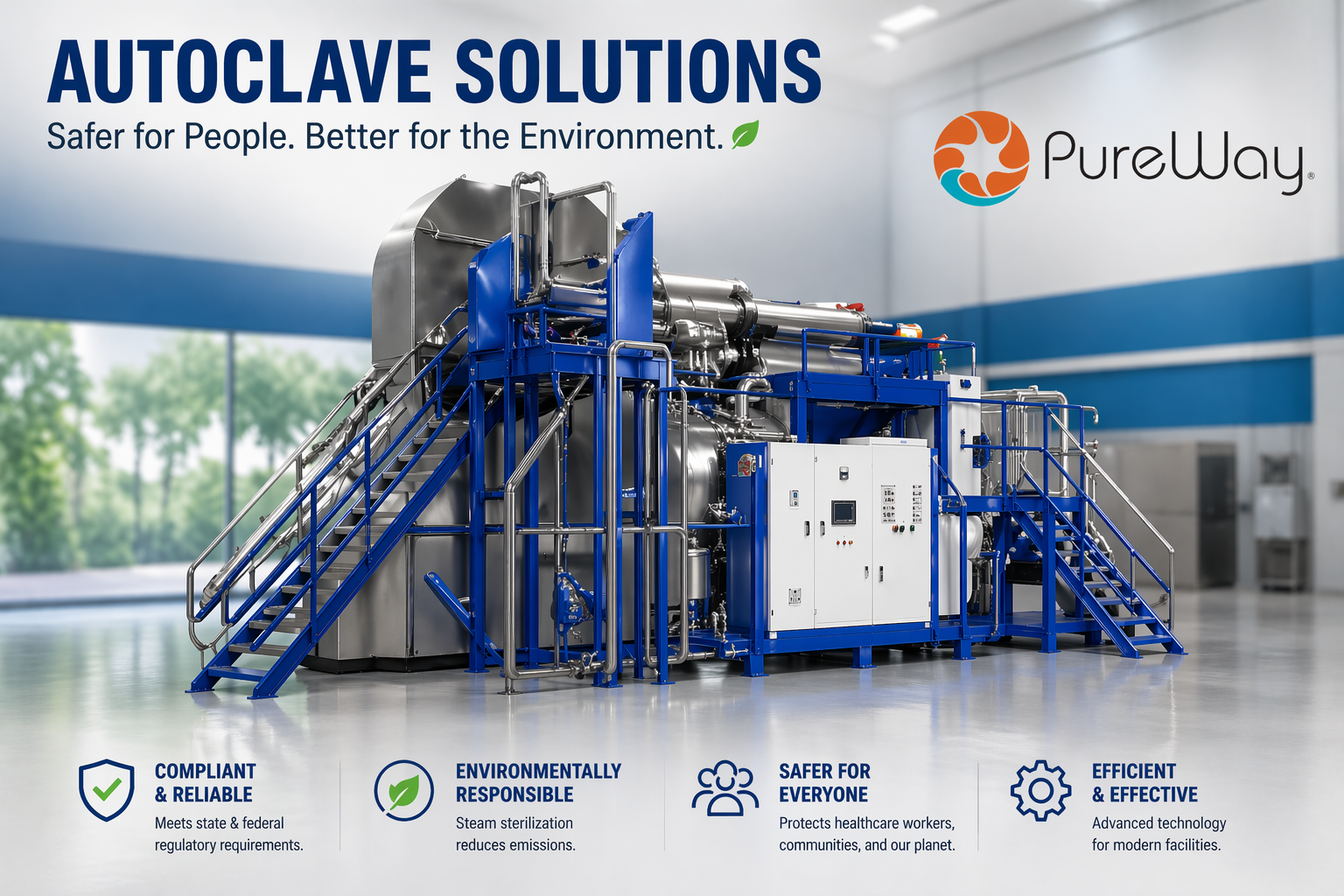
Autoclaves operate using a controlled process that combines saturated steam, pressure, temperature, and time to achieve sterilization. At a high level, regulated medical waste is placed inside a sealed chamber where air is removed and replaced with pressurized steam. This saturated steam is critical because it efficiently transfers heat to the waste materials, ensuring thorough penetration, even into porous or densely packed loads.
The effectiveness of the process depends on maintaining specific temperature and time parameters. Most medical waste autoclaves operate at temperatures typically ranging from 121°C to 134°C (250°F to 273°F) under elevated pressure for a defined period. The exact cycle time varies based on the volume and type of waste, but it must be sufficient to ensure complete microbial destruction.
Microbial inactivation occurs through the denaturation of proteins and the disruption of cellular structures. The combination of heat and moisture is especially effective at destroying bacteria, viruses, fungi, and even highly resistant bacterial spores, which are often used as a benchmark for sterilization performance. This process aligns with OSHA’s definition of sterilization as the complete elimination of all microbial life, including resistant forms.
To ensure the process is working correctly, autoclaves must be routinely validated. This is typically done using biological indicators, such as spore tests containing heat-resistant microorganisms like Geobacillus stearothermophilus. These indicators are placed within the waste load and then incubated after the cycle to confirm whether sterilization was successful. Regular validation, along with mechanical and chemical monitoring, is essential for demonstrating compliance and ensuring that treated waste is safe for downstream handling and disposal.
Autoclaving vs. Incineration: Key Differences
Emissions and Environmental Impact
- Autoclaving: Uses steam to disinfect waste without combustion, resulting in minimal air emissions
- Incineration: Involves burning waste, which can release pollutants such as dioxins, furans, and particulate matter, contributing to air quality concerns
Regulatory Scrutiny and Air Quality Concerns
- Autoclaving: Generally subject to less stringent air permitting since it does not produce combustion emissions
- Incineration: Heavily regulated under EPA air quality standards, with strict emission controls and monitoring requirements due to environmental and public health risks
Waste Volume Reduction vs. Waste Transformation
- Autoclaving: Primarily treats waste by sterilizing it, allowing it to be safely disposed of as solid waste, but does not significantly reduce volume unless combined with shredding
- Incineration: Significantly reduces waste volume and mass through combustion, leaving behind ash that must still be managed
Public Perception and Sustainability Goals
- Autoclaving: Viewed as a more environmentally responsible option, aligning with sustainability and ESG initiatives
- Incineration: Often faces public opposition due to emissions concerns, making it less favorable for organizations prioritizing environmental stewardship
Environmental Benefits of Autoclaving
#1 Reduced Air Pollutants Compared to Incineration: Autoclaving eliminates the need for combustion, significantly reducing the release of harmful air pollutants such as dioxins, furans, and particulate matter commonly associated with incineration.
#2 Lower Carbon Footprint in Many Applications: Autoclaves rely on steam rather than burning fuel. They often result in a lower overall carbon footprint, especially when integrated with energy-efficient systems or powered by cleaner energy sources.
#3 Supports ESG and Sustainability Initiatives: Autoclaving aligns with environmental, social, and governance (ESG) goals by offering a cleaner, more responsible method of treating regulated medical waste without compromising compliance or safety.
#4 Safer for Communities and Waste Handlers: By minimizing emissions and reducing the risk of environmental contamination, autoclaving provides a safer solution for surrounding communities and for workers handling treated waste downstream.
PureWay Makes Autoclaving a Realistic Option for Medical Facilities
PureWay takes a comprehensive, compliance-first approach to regulated medical waste management, helping healthcare facilities of all sizes navigate complex federal and state requirements while improving operational efficiency. By combining proven treatment technologies with practical service models, PureWay enables organizations to manage waste safely, responsibly, and in full alignment with regulatory expectations.
A key component of this approach is the use of autoclave technology within PureWay’s service offerings. By leveraging steam sterilization, PureWay ensures that infectious medical waste is properly treated to eliminate pathogens before final disposal. This supports compliance with OSHA requirements for minimizing exposure to bloodborne pathogens, as well as state-level mandates for rendering waste non-infectious prior to disposal.
For medical facilities like dental offices, pharmacies, home healthcare agencies, and veterinary clinics, this approach delivers several tangible benefits. First, it provides compliance assurance, giving facilities confidence that their waste is being managed in accordance with applicable regulations. Second, it helps reduce environmental impact by offering an alternative to incineration that minimizes harmful emissions. Third, it simplifies waste management processes through streamlined services designed to reduce administrative burden and improve consistency.
PureWay further enhances accessibility by integrating autoclave-based treatment into both mail-back systems and traditional pickup services. This flexibility allows facilities of all sizes, from small practices to large healthcare systems, to implement compliant, sustainable waste solutions without needing to invest in on-site treatment infrastructure.
Partner With PureWay for Compliant and Sustainable Waste Treatment
Autoclave sterilization stands out as a compliant, effective, and climate-conscious solution for managing regulated medical waste. By reliably eliminating infectious risks without the environmental drawbacks of incineration, it supports both regulatory compliance and modern sustainability goals. As healthcare organizations continue to face increasing pressure to improve safety and reduce environmental impact, now is the time to evaluate current waste management practices and consider more responsible alternatives.
To simplify compliance and transition to a more sustainable approach, explore PureWay’s autoclave-based solutions. Shop now to get started.
FAQs About Autoclaving Medical Waste
Q: What is an autoclave?
An autoclave is a machine that uses pressurized steam to sterilize equipment and treat regulated medical waste by destroying harmful microorganisms, including bacteria, viruses, and spores.
Q: What is autoclaving?
Autoclaving is the process of using saturated steam under controlled temperature and pressure to achieve sterilization. In medical waste management, it is used to render infectious waste non-hazardous, so it can be safely disposed of.
Q: How does an autoclave sterilizer work?
An autoclave sterilizer works by removing air from a sealed chamber and replacing it with high-temperature, pressurized steam. This combination of heat, moisture, and time denatures proteins and destroys microorganisms, ensuring effective sterilization.
Q: What does an autoclave do?
An autoclave disinfects and sterilizes materials by eliminating all microbial life. In the context of medical waste, it treats infectious materials, so they are safe for handling, transport, and final disposal in accordance with regulatory requirements.
Q: Does PureWay use autoclave sterilization?
Yes. PureWay utilizes autoclave sterilization as part of its regulated medical waste management solutions. By using steam-based treatment, PureWay helps ensure infectious waste is properly decontaminated in compliance with applicable regulations, while also offering a more environmentally responsible alternative to traditional incineration methods.